
How AI Is Changing the Way We Create Educational Content

Artificial intelligence is transforming how educational content is created, delivered, and accessed. In schools and lecture halls worldwide, AI content generation in education tackles longstanding challenges in curriculum design and drives personalized learning at scale. For business leaders and educational institutions, AI content generation means adaptive learning pathways, scalable content creation, and accessible resources for all learners,capabilities manual processes struggle to match.
Educators leveraging AI tools for content automation report notable improvements: customized lesson plans, instant quiz building, and instructional materials tailored to individual student needs. Academic administrators are exploring AI-powered curriculum solutions to shift faculty focus from repetitive prep toward mentorship and higher-level teaching.
These opportunities, however, bring new complexities. Data privacy, ethics, and academic integrity must be thoroughly evaluated. According to 2024 U.S. Department of Education research, about 83% of educators highlight ethical concerns around AI in content creation. The challenge is clear: can institutions harness AI while upholding rigorous academic standards? The answer is yes, provided there are robust policy frameworks and careful selection of AI vendors.
AI content generation in education is a tool for today, not just tomorrow. This article examines its practical integration, its value for inclusion, the ethical landscape, and which AI tools are delivering the greatest impact in modern classrooms.
Exploring the Advantages of AI Content Generation in Schools
AI content generation in education fundamentally changes how teachers and curriculum designers approach lesson planning, giving them back precious time and multiplying new instructional possibilities.
The most immediate benefit is efficiency. Traditional lesson planning may require hours of sourcing and editing materials. AI-powered platforms, like Wyrote, generate custom lesson plans, quizzes, and slides in just minutes. This shift enables teachers to devote more energy to engaging with students, reducing time spent on routine administrative tasks.
Personalized learning is now achievable on a broad scale. AI in education analyzes student data to recommend targeted resources, adapting materials to fit each learner’s strengths and challenges. For example, in a class where some students excel in analytical tasks but struggle with writing, AI-driven curriculum tools can provide tailored writing exercises and auto-generate quizzes reflecting real-time classroom progress.
Scalability is another major advantage. Whether supporting a multi-grade classroom or synchronizing curricula across several schools, AI tools quickly adapt content for any subject or grade, guaranteeing consistent learning experiences throughout a district or network.
Students benefit, too, with 24/7 access to study guides, interactive modules, and practice quizzes. Unlike static materials, these resources are always available, supporting independent study and helping bridge learning gaps for those in need of extra support.
These advantages collectively strengthen both teaching and learning, equipping educational environments with dynamic tools for success.
Overcoming Challenges: Limiting Misuse and Addressing AI Ethics in Education
While AI content generation in education introduces significant promise, it also brings unique challenges. Faculty forums and staff meetings now regularly confront concerns related to plagiarism, content bias, and the ethics of deploying AI in schools.

Academic integrity is at the forefront. AI can quickly produce polished, academic-sounding assignments, complicating the verification of original student thinking. This necessitates schools update their detection methods and rethink traditional approaches to assessment.
Content bias is another persistent area of concern. Because AI algorithms rely on large, sometimes non-representative datasets, biases can emerge after instructional materials have already reached students. For instance, K-12 and college settings have identified instances where automated curricula inadvertently reinforce cultural or linguistic stereotypes. Ensuring inclusivity requires robust vetting and ongoing auditing of digital content.
Another challenge is the potential erosion of teacher voice. While automation saves time, there’s risk that unique teaching insights, which spark engagement and foster critical thinking, could be lost.
"The human element,empathy and critical thinking,cannot be fully replicated by any algorithm, regardless of the technology’s sophistication."
Data privacy rounds out the main concerns. Laws such as FERPA and COPPA require strict data protections, demanding AI tools align with both legal and ethical expectations. For thorough guidance on risk mitigation, review our comprehensive guide to data security in educational technology.
Real-World Impact: AI Content Generation Case Studies That Drive Results
Across the country, schools implementing AI content generation in education are seeing measurable gains in student outcomes and engagement. Several illustrative case studies highlight how thoughtful integration of AI content tools is reshaping classroom dynamics.
For example, a large urban district incorporated AI-powered curriculum tools to support special education. After a semester, students with dyslexia achieved a documented 18% improvement in reading comprehension compared to the prior year, benefiting largely from personalized reading passages and adaptive comprehension questions produced by AI. A special education teacher at one involved middle school shared that several previously reluctant readers participated actively in group discussions for the first time,an effect directly attributed to accessible materials generated by the platform.
Consider another real classroom: if you teach a mixed-ability group with students requiring alternate formats,such as audiobooks for dyslexia or visual diagrams for ADHD,AI reduces lesson modification from hours to minutes, freeing you to focus on real-time interaction and support.
Additional benefits reported by educators:
- Instant creation of visual learning aids to support students with processing challenges or disabilities
- Personalized formative assessments, enabling instant feedback and building confidence for learners who require more differentiation
- Automated content adaptation, which allows educators to spend more time supporting students and less on manual lesson rewriting
These impacts are widespread. According to a 2025 national survey, schools implementing robust AI content automation saw a 22% increase in classroom participation. The evidence is clear: results deepen over time as teachers refine their strategies and leverage AI for more effective instruction.
For more details, browse recent AI education case studies.
Meeting Every Learner’s Needs: AI Content Generation for Diversity and Inclusion
AI content generation in education plays a central role in creating more inclusive classrooms by meeting a broad spectrum of learner needs. Students with learning differences,such as dyslexia or ADHD,benefit from content tailored to their specific profiles.
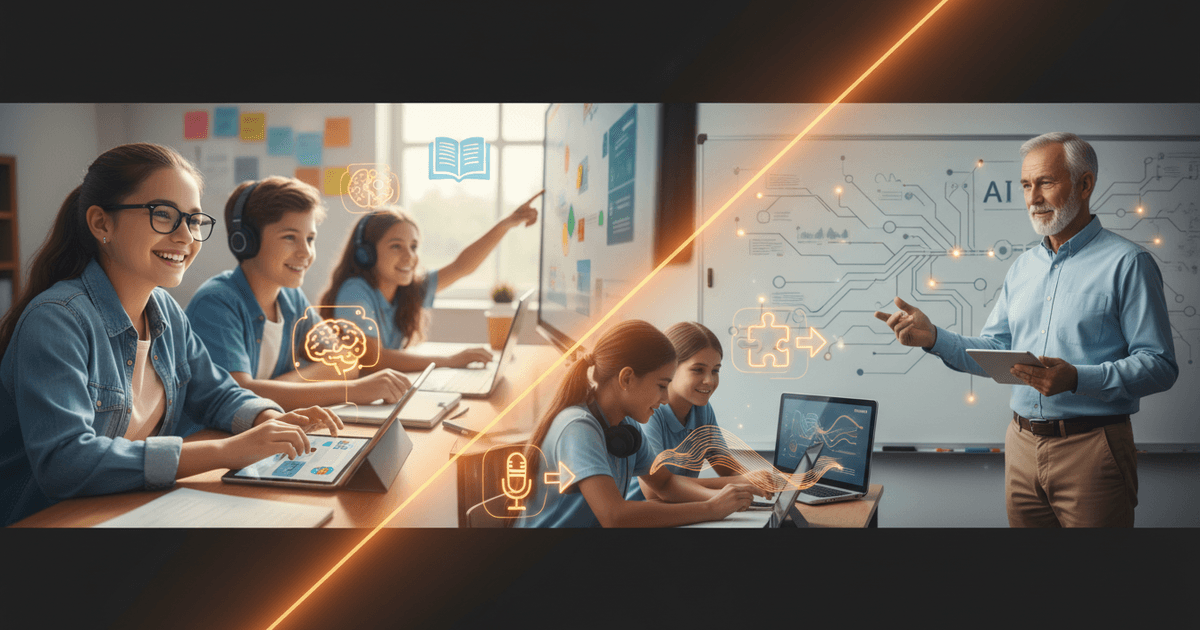
Take the example of a classroom with five out of thirty students having documented learning differences. Creating multiple versions of instructional material manually is impractical and can inadvertently leave students behind. AI tools simplify this by producing format variations in minutes, such as:
- Audiobook and text-to-speech conversions, helping struggling readers access materials alongside their peers
- Simplified summaries, vocabulary support, and visual aids, which assist comprehension for students with language processing challenges
- Adaptive pacing and segmented content, designed for learners with ADHD who need frequent feedback and clear information chunks
These AI-driven systems support discrete, student-initiated customization, so students can access accommodations privately through their own devices, reducing stigma and promoting equity. In fact, educators now report higher engagement not just for students with learning differences, but for all students when differentiated instruction is accessible to everyone.
A Step-by-Step Guide: Integrating AI Content Tools Into Your Curriculum
Successfully integrating AI content generation in education requires a structured, phased approach. Schools that see lasting impact typically avoid all-at-once rollouts and instead prioritize thoughtful, collaborative implementation.
Follow this roadmap for best results:
- Conduct a Needs Assessment
- Identify pain points where manual creation repeats or personalization is lacking
- Involve teachers and staff to ensure technology addresses real classroom problems
- Evaluate and Select the Right AI Tool
- Review features for grade and subject fit, usability, and privacy compliance
- Consider feedback from AI content platform demonstration sessions
- Pilot With Targeted Training
- Start with a small team of educators and offer hands-on workshops
- Test features by creating sample lessons or quizzes and address real classroom scenarios
- Expand Gradually and Offer Ongoing Support
- Scale adoption based on initial feedback and outcomes
- Schedule regular check-ins and knowledge-sharing sessions to identify further needs
For example, piloting with a science, English, and math teacher often uncovers different needs; the science teacher might need help with diagram creation, while the English teacher may seek more nuanced writing prompts. Documenting each experience is critical to maximizing platform ROI.
Quick tips for educators new to AI content tools:
- Try multiple template types for a range of subjects
- Collaborate with colleagues who have experience to avoid common missteps
- Track measurable improvements and flag any limitations, so future decisions are evidence-based
A phased and well-supported rollout will reduce staff resistance and lay the groundwork for lasting curriculum improvement.
Top AI Content Generation Tools in Education: Comparison and Compliance
Choosing the best AI content generation tool for education requires careful consideration of privacy, adaptability, and educator support. For institutions bound by FERPA or COPPA, strict privacy compliance is a non-negotiable requirement.

Here is a direct comparison of four widely-used AI content platforms, reflecting feedback from faculty and institutional technology leaders who have adopted these solutions:
| Tool | Privacy & Compliance | Adaptability | Educator Support | Notes |
|---|---|---|---|---|
| Eduaide | FERPA/COPPA-aligned, granular admin controls | Highly customizable content; strong for diverse learners | Dedicated onboarding, live chat | Best for compliance transparency |
| Quillbot | Basic privacy features, limited controls | Language-focused content creation; less subject versatility | Online guides | Excels at writing refinement, but less robust for classroom curricula |
| ScribeAI | GDPR-compliant, limited US guidance | Deep LMS integrations, moderate customization | Ticket-based helpdesk | Best for EU schools; support lag possible |
| Jasper | General data security; lacks education-specific solutions | Broad templates, best for non-specific material | Community forums, some webinars | Not designed specifically for K-12 or higher ed |
Suppose your institution generates 1.2 million words of course content annually across 15 faculty. A modest 20% efficiency gain from AI content automation could release hundreds of hours for deeper teaching and curriculum innovation.
Ask potential vendors for policy documentation, privacy guarantees, and real-world integrations with your learning management systems. Consistent educator support and customized training often distinguish high-impact implementations from failed pilots.
Frequently Asked Questions
What is Eduaide and how does it support educators?
Eduaide is an AI platform built for lesson planning, differentiated instructional material creation, and automated assessments. Educators use Eduaide to cut manual workload, unlocking more time for interactive instruction.
How does Eduaide differ from other AI tools?
Designed for classroom environments, Eduaide meets education-specific privacy standards and offers customizable templates. This produces content that is curriculum-aligned and relevant, versus more generic AI platforms.
Is Eduaide suitable for educators new to AI tools?
Yes. Eduaide features user-friendly workflows and easy prompts. Many new users benefit from guided tutorials and in-app support, making onboarding straightforward.
What are FERPA & COPPA compliance requirements for educational AI tools?
FERPA and COPPA establish guidelines safeguarding student data. Any platform must ensure student information is securely managed and never inappropriately shared. Administrators should examine platform privacy policies and require regular compliance verification.
For example, FERPA covers not just student grades, but any AI-generated report including identifiable student performance metrics.
How can educators ensure AI content is personalized for all students?
When creating content for classes with varied needs, use AI customization fields to input specific learning profiles such as language level, interests, or accommodations. This helps ensure output is tailored for every learner.
What are common risks with AI content in schools and how can they be addressed?
Key risks include biased outputs, over-reliance on automation, and data breaches. The greatest danger is educators skipping review steps, believing all AI outputs are classroom-ready. All content should be human-reviewed, with transparent selection and usage policies in place.
Elevate Your Institution With AI Content Generation
AI content generation in education enables schools, districts, and education-focused businesses to streamline resources while supporting all types of learners. With solutions like Wyrote, you can quickly produce SEO-optimized articles and visually engaging content,without requiring advanced technical skills. The result is more faculty time for teaching, improved resource consistency, and scalable personalized learning.
Compliance and trust matter. Our approach ensures you meet FERPA and COPPA requirements, building a reputation for ethical and transparent use of technology. AI should empower teachers, never replacing the human expertise at the heart of effective learning.
Ready to explore the future of educational content? Start a complimentary trial, request a one-on-one demonstration, or learn more about Wyrote’s AI-powered content platform for education.
For further academic perspective on education initiatives, check out resources like Give, Undergraduate Degree, and Non-Degree Credential.


Ready to automate your SEO content?
Wyrote creates publish-ready articles from your keyword strategy.
Get Started Free